잠시만 기다려 주세요
잠시만 기다려 주세요
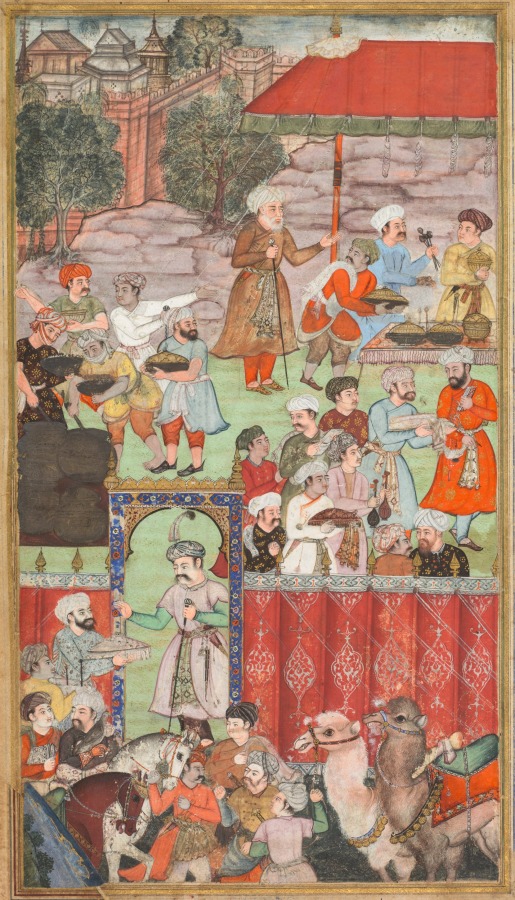
Basavana · c. 1585; inner border added in Allahabad c. 1602; outer border added probably 1900s · 클리블랜드 미술관
작품의 주요 특징과 배경을 연결해 살펴봐요.
가이드를 찾고 있습니다.
As the Mughal atelier grew into the 1580s, Indian artists become increasingly adept at incorporating Persian styles with a new dimensionality and naturalism that Akbar promoted, possibly based on his appreciation of European prints and paintings. Here, a sincere holy man wears robes tinged lightly with blue. He stands beneath a tree in the wilderness with a loyal jackal by his side. A devotee touches his head to his feet. The artist’s tiny signature is written on the alms bowl. Connoisseurs of Persian art in the Islamic world praised an artist’s virtuoso ability to work on a microscopic scale. The dog stares hungrily at the mendicant’s alms bowl, with the artist’s signature.
미술관이 쓴 설명 원문입니다(영어). 라이선스: CC0
작품 이미지와 미술관 정보를 이 기기에 저장해 인터넷 연결 없이 읽어 보세요.
궁금한 것을 내 말로 물어보세요. 미술관이 이 작품에 대해 쓴 글에서 답을 찾고, 거기에 없으면 없다고 말합니다.
이미지: Cleveland Museum of Art, CC0
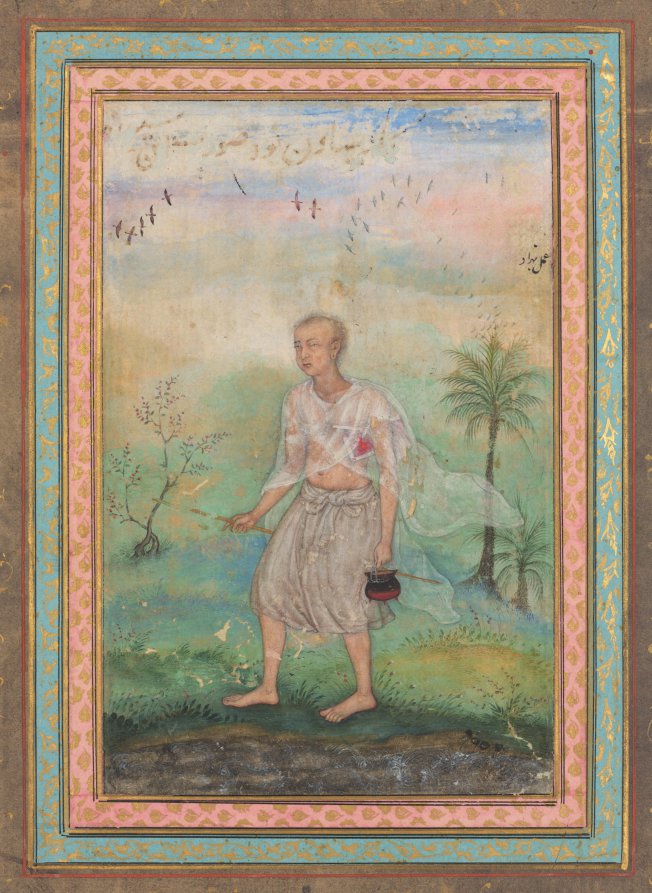 Jain Ascetic Walking Along a RiverbankBasavana · c. 1600
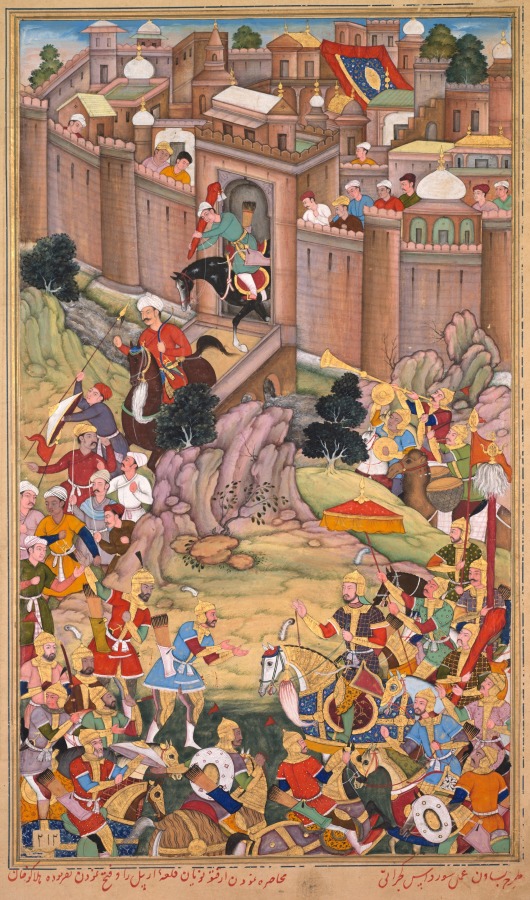
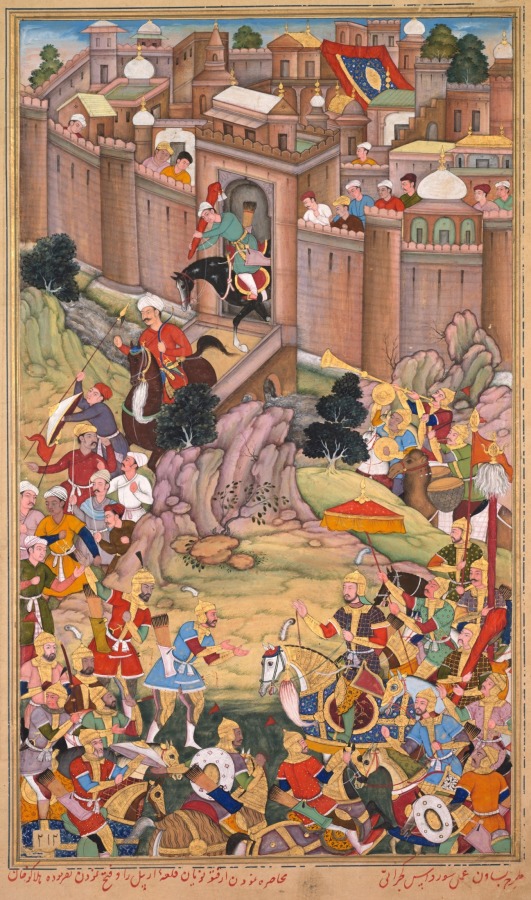 The siege of Arbela in the era of Hulagu Khan, from a Chingiz-nama (Book of Chingiz Khan) of the Jami al-tavarikh (Compendium of Chronicles) of Rashid al-Din (Persian, 1247–1318)Basavana · c. 1596
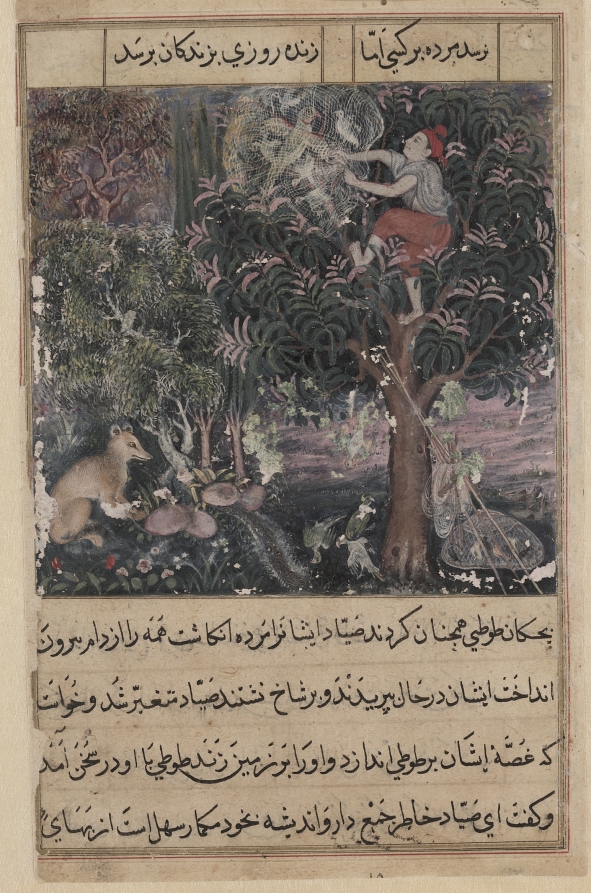
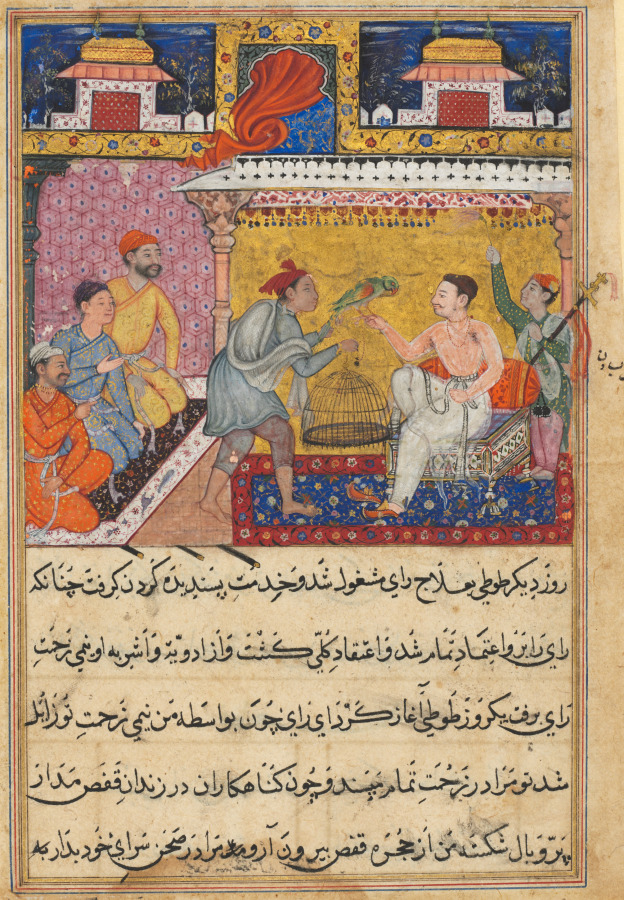 The hunter offers the mother parrot to the king of Kamarupa, from a Tuti-nama (Tales of a Parrot): Fifth NightBasavana · c. 1560