잠시만 기다려 주세요
잠시만 기다려 주세요
작품의 주요 특징과 배경을 연결해 살펴봐요.
가이드를 찾고 있습니다.
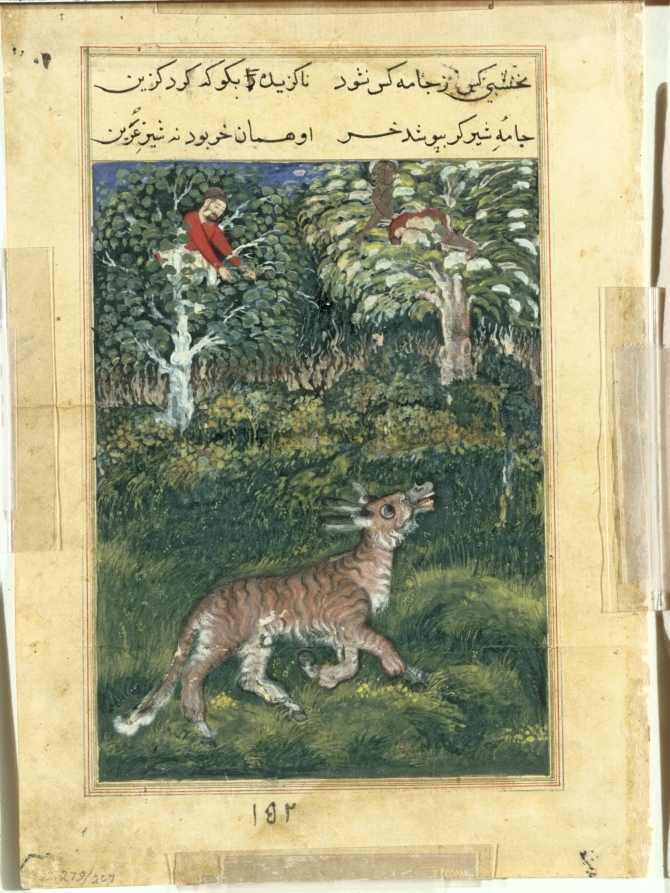
The king of Kamarupa, which ironically means “body of erotic love,” had leprosy. The hunter brought the captured mother parrot to the king, assuring him that the bird knew a cure. The lavish use of gold indicates that this book was a costly production. The figure of the hunter reveals the talents of the artist Basavana, whose name is written in the right margin. Draped in rustic garments shaded to appear softly flowing, the hunter bends forward with a subtle look of shrewd expectancy as the king seems ready to pay a high price for the parrot. The billowing red curtain is one of Basavana’s signature motifs. Beyond is a tantalizing glimpse of the forest to which the parrot will soon escape to rejoin her children. This leper king ruled a territory that stretched from Bhutan to Assam and Bengal.
미술관이 쓴 설명 원문입니다(영어). 라이선스: CC0
작품 이미지와 미술관 정보를 이 기기에 저장해 인터넷 연결 없이 읽어 보세요.
궁금한 것을 내 말로 물어보세요. 미술관이 이 작품에 대해 쓴 글에서 답을 찾고, 거기에 없으면 없다고 말합니다.
이미지: Cleveland Museum of Art, CC0
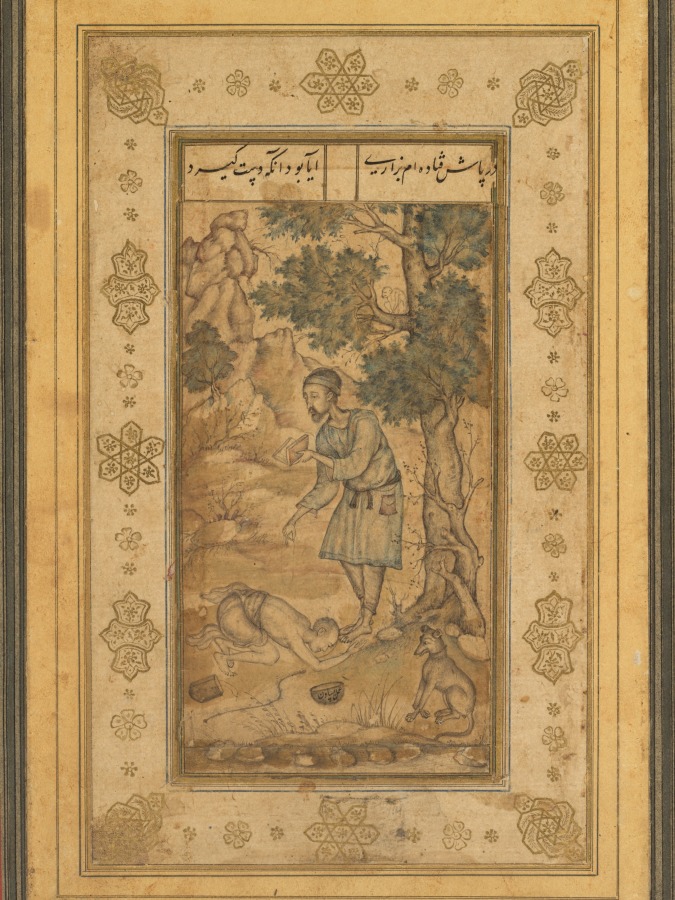
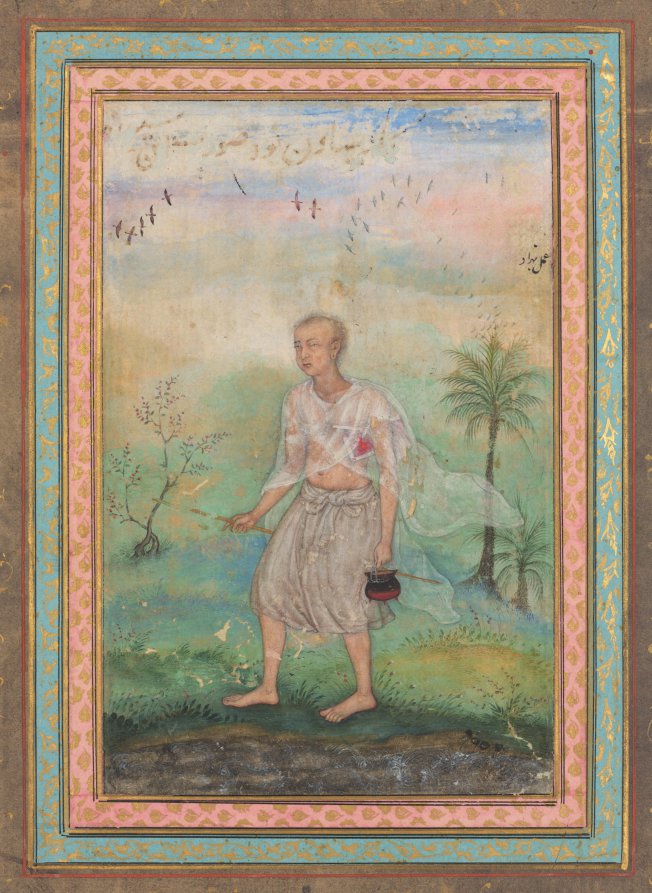 Jain Ascetic Walking Along a RiverbankBasavana · c. 1600
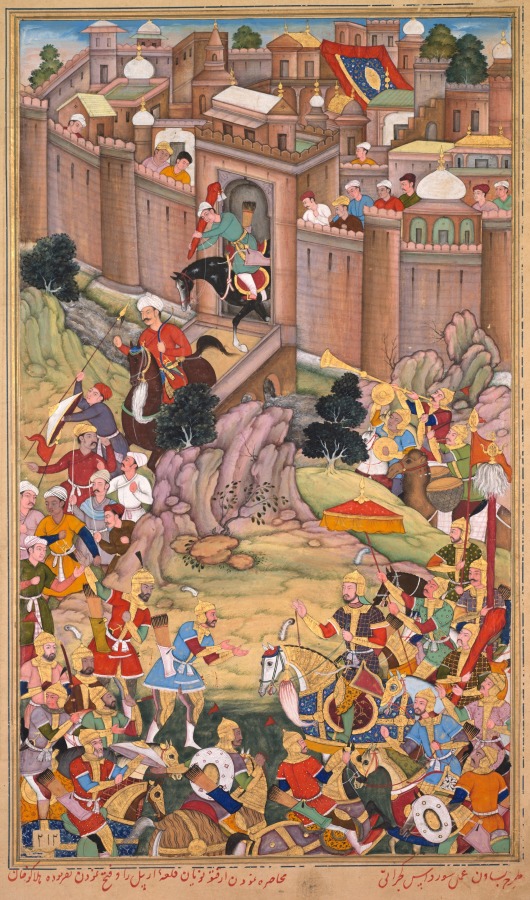
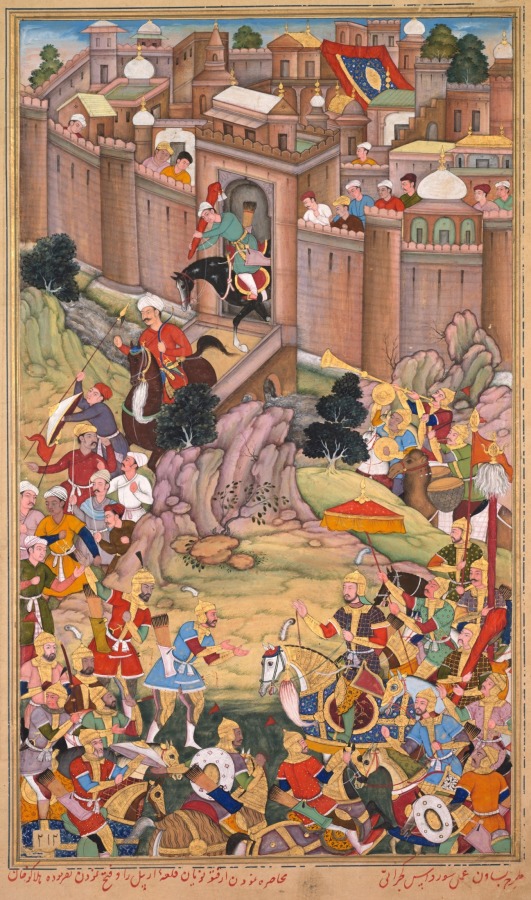 The siege of Arbela in the era of Hulagu Khan, from a Chingiz-nama (Book of Chingiz Khan) of the Jami al-tavarikh (Compendium of Chronicles) of Rashid al-Din (Persian, 1247–1318)Basavana · c. 1596
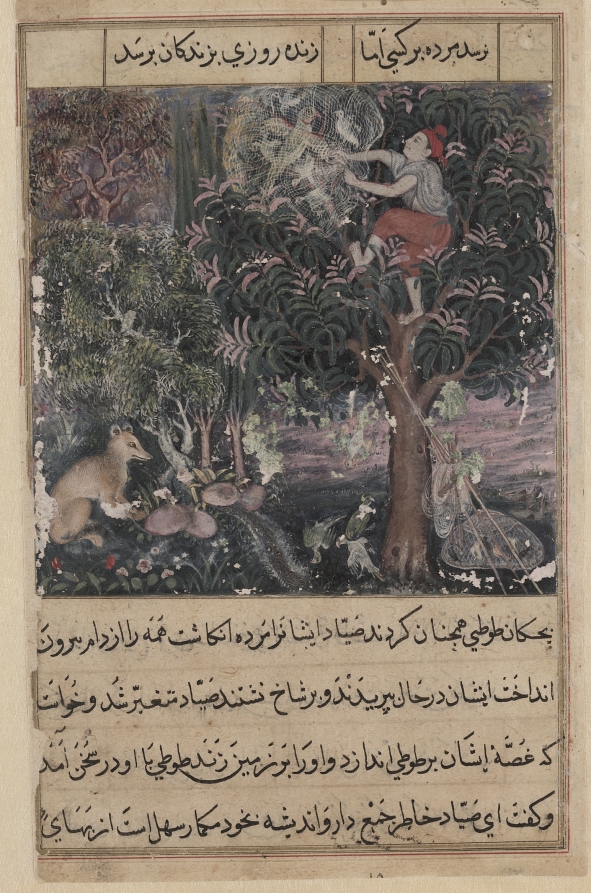 The hunter throws away the baby parrots, who pretend to be dead, and captures the mother, from a Tuti-nama (Tales of a Parrot): Fifth NightBasavana · c. 1560