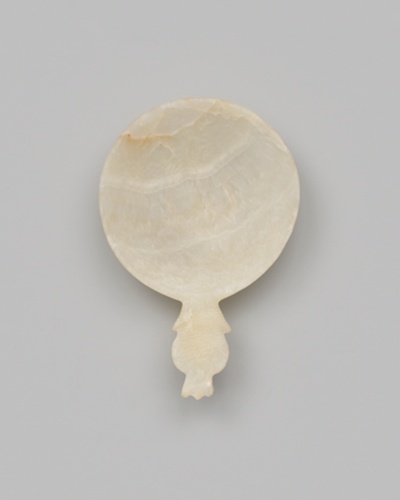
Bowl
Ancient Egyptian · Predynastic Period–Old Kingdom, Naqada II–Dynasty 6 (about 3500–2181 BCE) · Art Institute of Chicago
Guide
Adjust the guideNew to it · Medium
Looking for this guide.
From the museum
Egyptian alabaster is a form of limestone (calcite) that is found in the Eastern Desert of Egypt. It was favored for cosmetic and ritual offering dishes because of its beautiful color and translucent quality.
The museum’s own description, in English. Licence: CC BY 4.0
What did you think?
Save this work’s image and museum information on this device to read without a connection.
Ask about this work
Ask in your own words. The answer comes from what the museum has written about the work, and says so when that does not hold it.
Details
- Maker
- Egyptian
- Date
- Predynastic Period–Old Kingdom, Naqada II–Dynasty 6 (about 3500–2181 BCE)
- Medium
- Travertine (Egyptian alabaster)
- Dimensions
- 11 × 22.8 × 22.3 cm (4 5/16 × 8 15/16 × 8 3/4 in.)
- Place of origin
- Egypt
- Held by
- Art Institute of Chicago, Chicago · On view · Gallery 50
- Credit line
- Gift of Henry H. Getty, Charles L. Hutchinson, and Norman W. Harris
Image: Art Institute of Chicago, CC0
More by Ancient Egyptian
GuideCoffin and Mummy of PaankhaenamunAncient Egyptian · Third Intermediate Period, Dynasty 22, reign of Osorkon I (about 924–889 BCE)
GuideStela of Amenemhat and HemetAncient Egyptian · Middle Kingdom, early Dynasty 12, about 1956–1877 BCE
Fragment of a Stela of NeferhotepAncient Egyptian · New Kingdom, mid-Dynasty 19, about 1240-1195 BCE