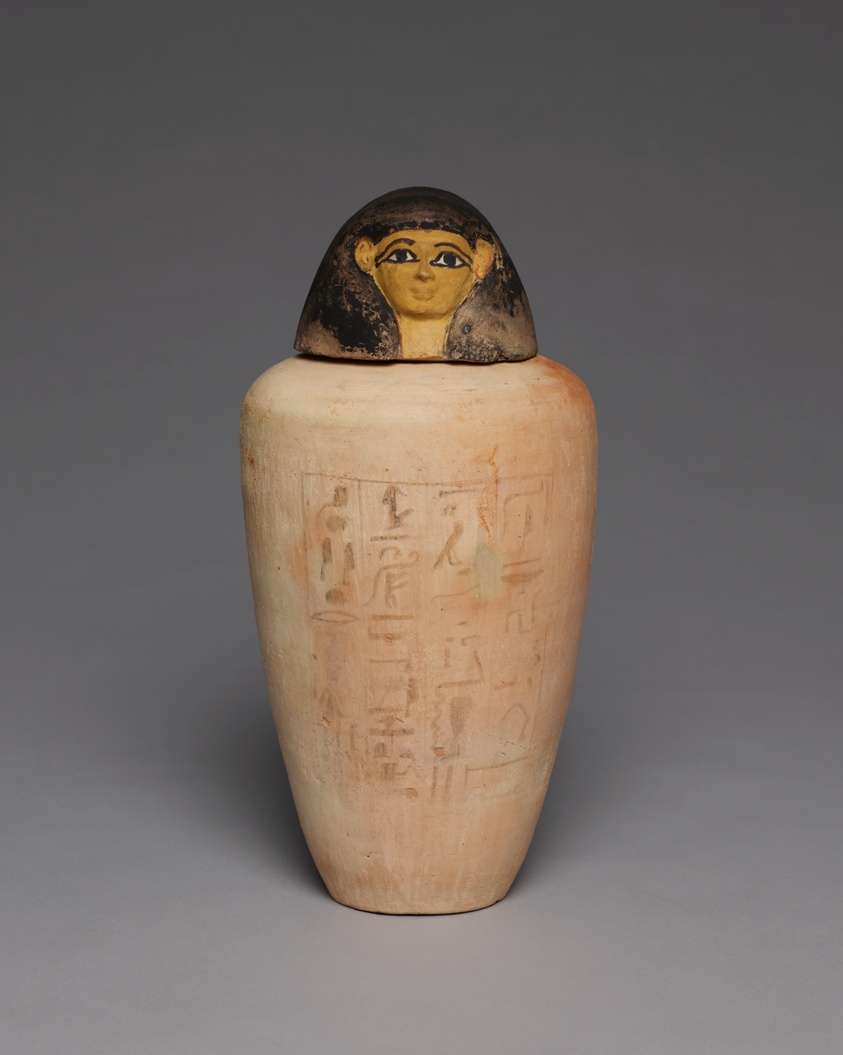
Canopic Jar of Amenhotep
Ancient Egyptian · New Kingdom, Dynasty 18, reign of Amenhotep II (about 1427–1400 BCE) · Art Institute of Chicago
What did you think?
Guide
Adjust the guideNew to it · Medium
Nobody has listened to this guide yet. Making it takes about twenty seconds, and after that anyone can hear it straight away.
From the museum
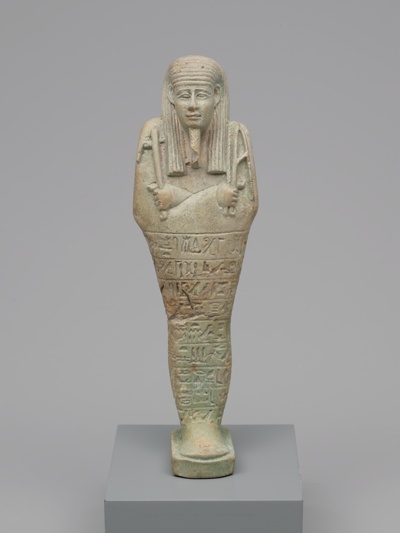
One of a set of four jars that belonged to Amenhotep, who oversaw architectural projects in the temple of Amun at Karnak (in present-day Luxor). Now empty, the jars once held Amenhotep’s liver, lungs, intestines, and stomach, which were removed during the mummification process. Each jar has a hand-sculpted stopper that may represent its owner or one of the four sons of Horus, a set of gods associated with these vital organs. An inscription in hieroglyphs on each container promises divine protection over its contents by a different goddess: Selket, Neith, Nephthys, or Isis.
The museum’s own description, in English. Licence: CC BY 4.0
Ask about this work
Ask in your own words. The answer comes from what the museum has written about the work, and says so when that does not hold it.
Details
- Maker
- Egyptian; Tomb A7, Dra Abu el-Naga, Thebes (now Luxor), Egypt
- Date
- New Kingdom, Dynasty 18, reign of Amenhotep II (about 1427–1400 BCE)
- Medium
- Ceramic and pigment
- Dimensions
- a (jar): 30.7 × 18.4 × 18.4 cm (12 1/8 × 7 1/4 × 7 1/4 in.) b (lid): 12.7 × 12.7 × 13.3 cm (5 × 5 × 5 1/4 in.)
- Place of origin
- Egypt
- Held by
- Art Institute of Chicago, Chicago · On view · Gallery 50
- Credit line
- Purchased with funds provided by Henry H. Getty and Charles L. Hutchinson
Image: Art Institute of Chicago, CC0
More by Ancient Egyptian
GuideCoffin and Mummy of PaankhaenamunAncient Egyptian · Third Intermediate Period, Dynasty 22, reign of Osorkon I (about 924–889 BCE)
GuideStela of Amenemhat and HemetAncient Egyptian · Middle Kingdom, early Dynasty 12, about 1956–1877 BCE
Fragment of a Stela of NeferhotepAncient Egyptian · New Kingdom, mid-Dynasty 19, about 1240-1195 BCE
Tomb Wall Fragment Depicting DonkeysAncient Egyptian · Old Kingdom, late Dynasty 5, about 2375 BCE