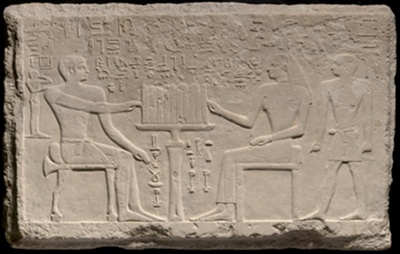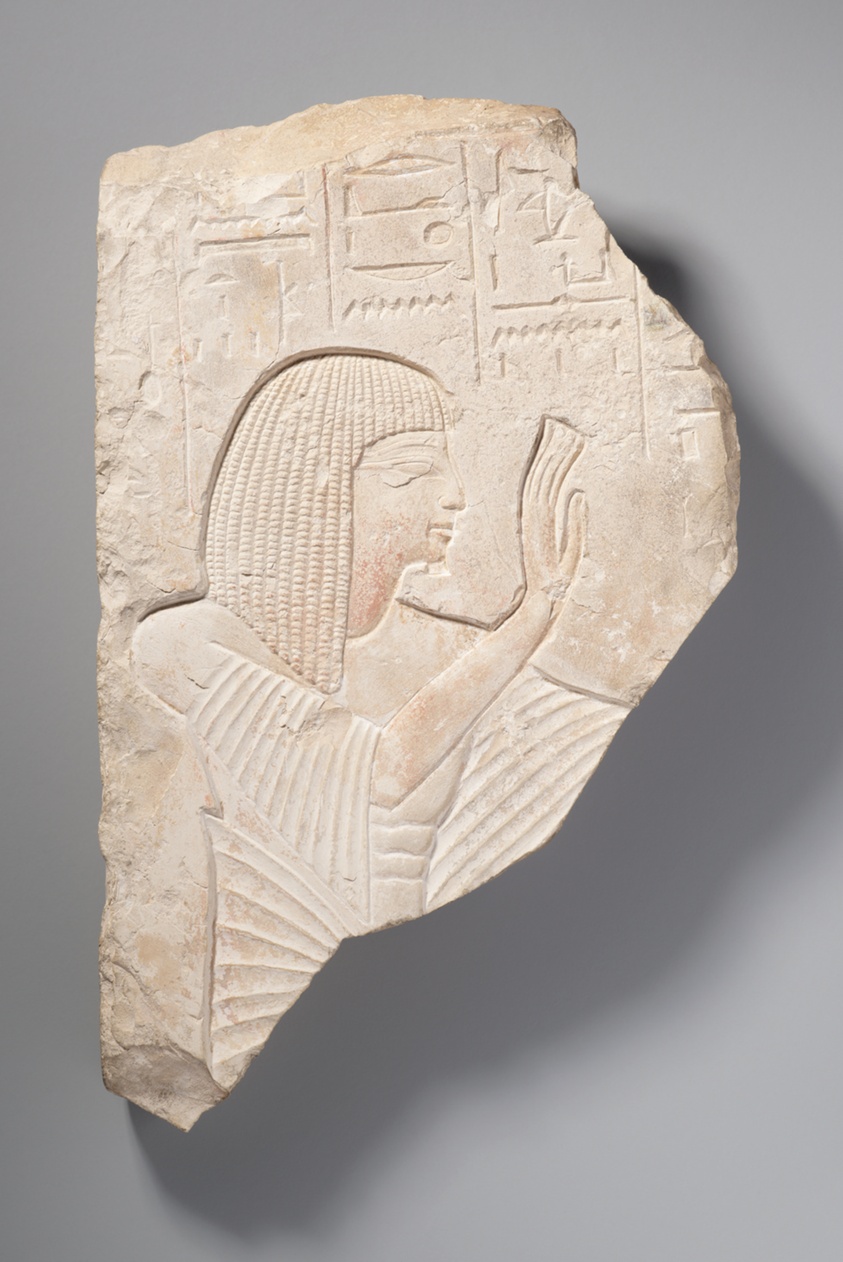
Fragment of a Stela of Neferhotep
Ancient Egyptian · New Kingdom, mid-Dynasty 19, about 1240-1195 BCE · Art Institute of Chicago
What did you think?
Guide
Adjust the guideNew to it · Medium
Nobody has listened to this guide yet. Making it takes about twenty seconds, and after that anyone can hear it straight away.
From the museum
The hieroglyphs at the top of this stela (commemorative stone) fragment help identify the man depicted as Neferhotep, a foreman of the workers who built and decorated the royal tombs in the Valley of the Kings at Thebes. Neferhotep, who is finely dressed in pleated white garments, raises his hands before him in a gesture of adoration toward the deity, who would have been depicted in the upper portion of the stone. Stelae such as this one allowed nonroyal Egyptians to demonstrate their devotion to the gods.
The museum’s own description, in English. Licence: CC BY 4.0
Ask about this work
Ask in your own words. The answer comes from what the museum has written about the work, and says so when that does not hold it.
Details
- Maker
- Egyptian; probably Theban Tomb 216, Deir el-Medina, Egypt
- Date
- New Kingdom, mid-Dynasty 19, about 1240-1195 BCE
- Medium
- Limestone and pigment
- Dimensions
- 38.5 × 23.8 × 5.8 cm (15 × 9 3/8 × 2 3/8 in.)
- Place of origin
- Egypt
- Held by
- Art Institute of Chicago, Chicago · On view · Gallery 50
- Credit line
- Lois H. Culver Fund
Image: Art Institute of Chicago, CC0
More by Ancient Egyptian
GuideCoffin and Mummy of PaankhaenamunAncient Egyptian · Third Intermediate Period, Dynasty 22, reign of Osorkon I (about 924–889 BCE)
GuideStela of Amenemhat and HemetAncient Egyptian · Middle Kingdom, early Dynasty 12, about 1956–1877 BCE
Tomb Wall Fragment Depicting DonkeysAncient Egyptian · Old Kingdom, late Dynasty 5, about 2375 BCE
Canopic Jar of AmenhotepAncient Egyptian · New Kingdom, Dynasty 18, reign of Amenhotep II (about 1427–1400 BCE)