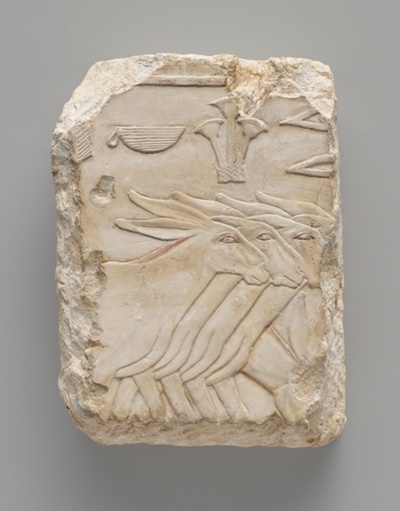
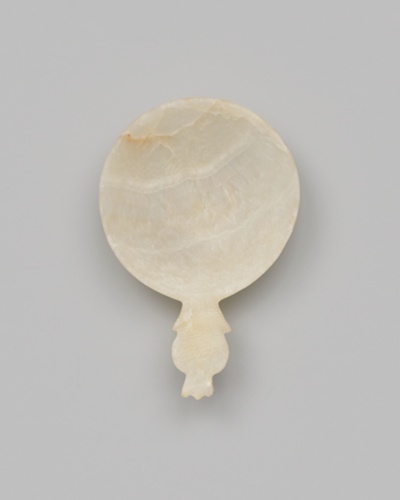
Plaque Depicting a Ram
Ancient Egyptian · Ptolemaic Period (332–30 BCE) · Art Institute of Chicago
Guide
Adjust the guideNew to it · Medium
Looking for this guide.
From the museum
The two sets of horns on this exemplary portrayal of a ram reflect ancient Egyptian sculptors’ simultaneous close observation of nature and strict adherence to artistic tradition. The elongated corkscrew horns atop the ram’s head belong to a species that was already long extinct when this plaque was carved. Rather than abandoning the conventional representation of this animal, artists added a set of curved horns to reflect the appearance of contemporary rams. On similar plaques portions of the original gridded surface remain in the top corners and along the bottom to emphasize the depth of carving. Egyptian artists utilized grids to maintain correct proportions in their work.
The museum’s own description, in English. Licence: CC BY 4.0
What did you think?
Save this work’s image and museum information on this device to read without a connection.
Ask about this work
Ask in your own words. The answer comes from what the museum has written about the work, and says so when that does not hold it.
Details
- Maker
- Egyptian
- Date
- Ptolemaic Period (332–30 BCE)
- Medium
- Limestone
- Dimensions
- 17.2 × 25.8 × 2 cm (6 13/16 × 10 3/16 × 13/16 in.)
- Place of origin
- Egypt
- Held by
- Art Institute of Chicago, Chicago · On view · Gallery 50
- Credit line
- Museum Purchase Fund
Image: Art Institute of Chicago, CC0
More by Ancient Egyptian
GuideCoffin and Mummy of PaankhaenamunAncient Egyptian · Third Intermediate Period, Dynasty 22, reign of Osorkon I (about 924–889 BCE)
GuideStela of Amenemhat and HemetAncient Egyptian · Middle Kingdom, early Dynasty 12, about 1956–1877 BCE
Fragment of a Stela of NeferhotepAncient Egyptian · New Kingdom, mid-Dynasty 19, about 1240-1195 BCE